Steve Jobs on How to Run a Company (A 2-min Answer)
Plus, on the importance of speaking up

Hassan Osman
August 16, 2026
In today’s newsletter:
📖 Steve Jobs’ 2-minute Answer on Running a Company
💬 Only 1 in 5 Want to Be in the Office
🏫 Type 4x Faster Using Your Voice & AI (Free)
🧠 On the Importance of Speaking Up
✍️ An 80/20 Tip You Can Apply Today
Read time: 5.5 minutes

THE ONE THING
1. Steve Jobs’ 2-minute Answer on Running a Company
Someone once asked Steve Jobs, “How do you learn to run a company?”
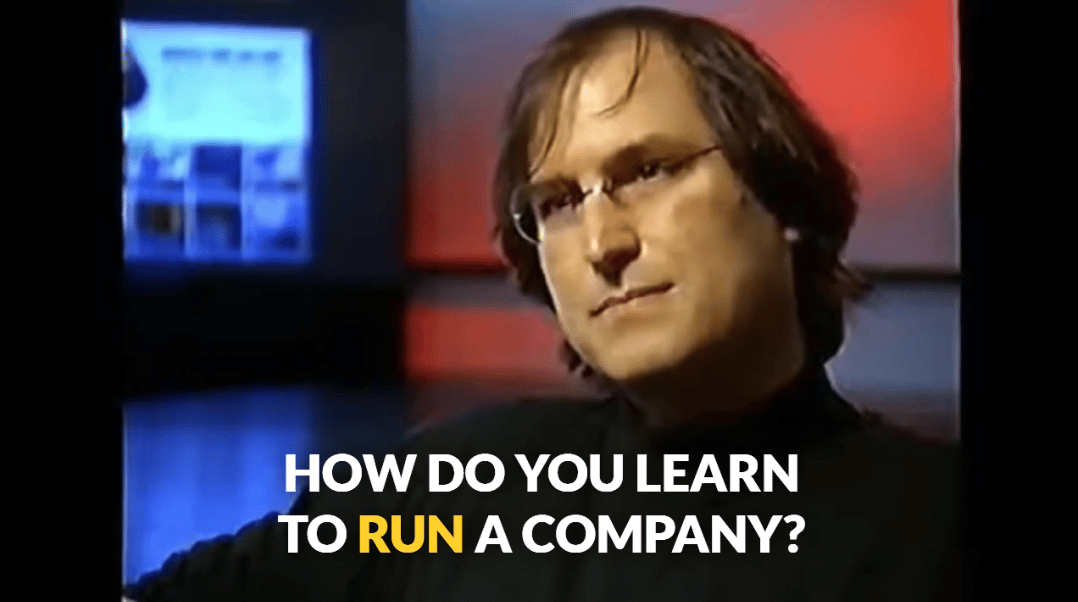
You can watch his 2-minute response by clicking here (I posted the clip on LinkedIn), but if you'd rather read it, here’s the full transcript:
“You know, throughout the years in business I found something, which was I always ask why you do things. And the answers you invariably get are, oh, that's just the way it's done. Nobody knows why they do what they do. Nobody thinks about things very deeply in business. That's what I found. I'll give you an example.
When we were building our Apple Ones in the garage, we knew exactly what they cost. When we got into a factory in the Apple Two days, the accounting had this notion of a standard cost where you'd kind of set a standard cost and then at the end of a quarter you'd adjust it with a variance. And I kept asking, well, why do we do this?
And the answer was, well, that's just the way it's done. And, and after about six months of digging into this, what I realized was. The reason you do it is because you don't really have good enough controls to know how much it costs. So you guess, and then you fix your guess at the end of the quarter. And the reason you don't know how much it costs is because your information systems aren't good enough.
But nobody said it that way. And so later on when we designed this automated factory for Macintosh, we were able to get rid of a lot of these antiquated concepts and know exactly what something cost to the second. So in business, a lot of things are, I, I call it folklore. They're done because they were done yesterday and the day before.
And so what that means is, is if you're willing to sort of ask a lot of questions and think about things and work really hard, you can learn business pretty fast. It's not the hardest thing in the world.”
The takeaway
To me, the biggest takeaway from this is the power of questioning assumptions.
Steve’s response is a reminder that much of what teams do is based on tradition, not logic.
It reminded me of the “5 Monkeys Experiment” and that all-too-familiar excuse: “That’s the way we’ve always done it.” (Something I covered in a previous Leadership 80/20 newsletter.)
TRENDS
2. Only 1 in 5 Want to Be in the Office
Companies pushing employees back on-site face a hard truth: most people don’t want to be there.
A global survey from 2025 found that almost two-thirds of employees are working full-time in the office, but only 19% of them actually want to be there.
Nearly half would prefer a hybrid schedule and about a quarter would choose to be fully remote.
It’s no surprise: 80% of workers worldwide say flexible hours are a top priority for job satisfaction.
For leaders, this is a wake-up call that rigid return-to-office mandates can backfire.
The takeaway
Flexibility isn’t just a perk – it’s a competitive advantage in keeping teams happy and productive.
PRESENTED BY
This week’s newsletter is sponsored by Wispr Flow, a tool that helps you send updates without editing. Try it free by clicking on the link below.
Stop typing what you could say in 10 seconds.

Wispr Flow turns your voice into clean, professional text inside any app. Emails, Slack, client updates — speak once, send without editing. 4x faster than typing.
WORDS I LIKE
4. On the Importance of Speaking Up

THE 80/20
5. An 80/20 Tip You Can Apply Today
Here’s a low-effort, high-impact tip you can use with your team today:
What: Overcommunicate with your virtual team members to increase trust (and avoid the transactional silo effect that remote teams are prone to).
Why: This is based on the “Propinquity Effect,” which states that the more you interact with someone, the more you’ll like and trust them.
Example: Stay in touch with your team members (especially your direct reports) at least once every couple of days, even if it’s not absolutely essential. An easy way to do this is to connect with them using Instant Messaging (IM) tools or to give them a quick call to check on things.
Want more of those tips?
Check out my free Amazon Bestselling book called: Influencing Virtual Teams.
You can grab it for free by clicking the button and subscribing to the newsletter 👇️